If you’ve ever asked your child to clean up their toys and heard “no,” walked into a messy room five minutes later, or ended up cleaning everything yourself—you’re not alone.
Teaching children to clean up isn’t just about keeping the house organized. It’s about helping them build responsibility, independence, and good habits that will stay with them as they grow.
The key is not forcing—it’s guiding.
Start with the Right Expectation
Young children don’t naturally understand why cleaning up matters. For them, playtime is exciting, and stopping feels frustrating.
Instead of expecting perfect behavior right away, think of it as something they will learn over time.
Progress is more important than perfection.
Make It Part of the Routine
Children respond very well to consistency.
If cleaning up happens at the same time every day—after playtime, before dinner, or before bedtime—it becomes something they expect.
You can say:
“When we finish playing, we clean up together.”
Over time, this becomes a natural habit instead of a daily struggle.
Turn Clean-Up into a Game
Cleaning doesn’t have to feel like a chore.
Try making it fun:
Play music and clean until the song ends
Turn it into a race (“Let’s see how fast we can do it!”)
Use a timer as a challenge
When it feels like play, children are much more willing to participate.
Do It Together (At First)
One of the biggest mistakes parents make is expecting children to clean independently too early.
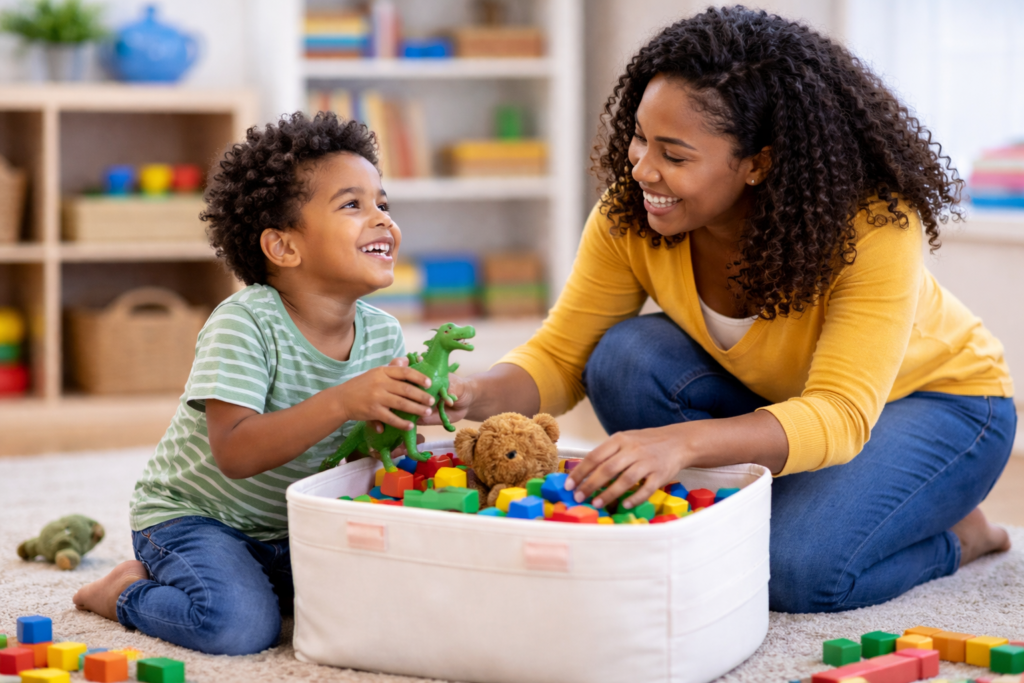
At the beginning, do it with them:
Hand them one toy at a time
Show them where things go
Encourage them along the way
Instead of:
“Go clean your toys”
Try:
“Let’s clean up together.”
This builds confidence and understanding.
Keep It Simple and Organized
If the space is overwhelming, children won’t know where to start.
Make it easier by:
Using bins or baskets
Grouping similar toys together
Keeping storage at their level
When everything has a clear place, cleaning becomes much easier.
Use Positive Reinforcement
Children respond much better to encouragement than correction.
Notice their effort:
“You did a great job picking up your toys”
“I like how you helped clean up”
Even small progress deserves recognition.
This motivates them to repeat the behavior.
Avoid Turning It Into a Power Struggle
If cleaning up becomes a battle, children may resist even more.
Instead of arguing or forcing:
Stay calm
Be consistent
Offer simple choices
Example:
“Do you want to pick up the blocks or the cars first?”
This gives them a sense of control while still guiding them.
Give Them Time to Transition
One common reason children resist cleaning is because they’re not ready to stop playing.
Give a gentle warning:
“In 5 minutes, we’re going to clean up”
“After this, it’s clean-up time”
This helps them prepare mentally for the transition.
Focus on Building the Habit
The goal isn’t just a clean room—it’s teaching your child a lifelong skill.
Over time, with consistency and support, you’ll notice:
Less resistance
More independence
Better cooperation